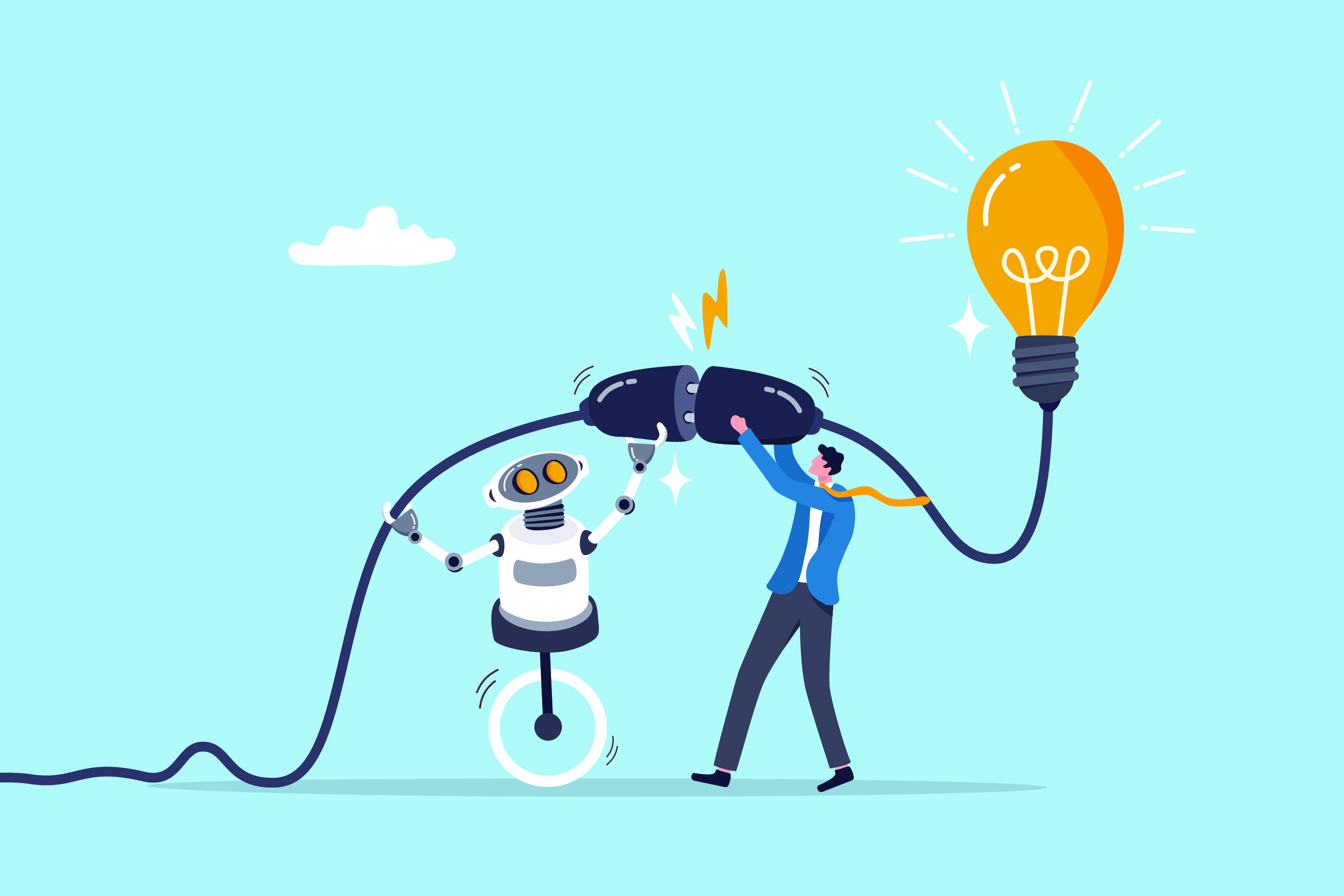

In early nineteenth-century London, lamp lighting was a growth industry. The city’s population exploded over the course of the 1800s, rising from roughly one million residents to nearly seven million by century’s end. To make the growing metropolis safer and more navigable, gas lamps lined the streets, and thousands made their living as lamplighters.
Since you’re reading this on a computer screen, you already know what came next: electricity. Electric lights improved on gas lamps in every conceivable way. They were safer, more reliable, and vastly more efficient. Entire cities could be illuminated simultaneously rather than awaiting individuals armed with eight-foot poles and torches to make their nightly rounds.
The Psychology of Progress
Replacing lamplighters with electric lighting is a textbook definition of progress. Of course, progress is cold comfort to those displaced by it. An entire profession, and the identity built around it, was extinguished.
Fast-forward a little over a century, and we find ourselves facing a similar inflection point. An AI revolution is underway, and with it comes a familiar existential anxiety. The technical capabilities of these tools have been discussed at length. What concerns me more is the psychology surrounding them.
Our Inherent Negativity Bias
Herein lies the paradox: people complain that nothing ever changes, yet respond with fear and dread when confronted with meaningful change. The only thing we seem to hate more than stagnation is transformation. This reflects a deep negativity bias – we are far more attuned to losses than gains – even though productivity, in aggregate, has historically been an overwhelming force for good.
Consider the most pressing challenges facing our species. Environmental degradation is an obvious one. Medicine, despite extraordinary progress over the past century, still suffers from inefficiencies and resource shortages. This makes current discourse about AI “replacing doctors” particularly revealing. Our healthcare systems are constrained not by excess labour, but by insufficient capacity, both human and material.
Beyond the “Replacement” Narrative
I’m optimistic that AI will be used to augment, not displace, practitioners. Earlier diagnoses, shorter wait times, and more personalized treatment plans are not outcomes worth fearing.
Demographics present another looming issue. Across much of the Western world, birth rates are falling, populations are aging, and the sustainability of entitlement programs is increasingly in question. For decades, we’ve worried about having too few workers. Now, at the prospect of a durable productivity enhancement, the narrative abruptly shifts to fears of mass unemployment.
What will people do when AI comes for all the jobs?
This question, I think, reflects not a lack of hope, but a lack of imagination.
The Imagination Gap
Destruction is easy to foresee; creation is not. It was obvious that electric lights would eliminate lamplighters. What was far less obvious were the countless industries electricity would give rise to. Someone born during the American Civil War could have lived to see the emergence of the telephone, radio, and television. Identifying what will be uprooted requires little insight. Envisioning what will replace it demands ingenuity.
Efficiency vs. Obsolescence
Even absent optimism, another enduring human trait offers reassurance: greed. The Industrial Revolution carried promises that rising productivity would reduce working hours and expand leisure. While productivity did surge, efficiency gains were largely channeled into higher output rather than less work. Machines did not render human labour obsolete; they reshaped it.
I expect the same pattern to hold. Humans will remain the driving force of the economy, even as individual roles evolve – as they always have in a healthy, productive system. It’s possible we are approaching a breakthrough that truly makes human capital superfluous, but history suggests otherwise. Previous technological leaps have often reduced unemployment and created entirely new industries. Many of us work in fields that either barely resemble their predecessors or did not exist at all just a few generations ago.
For now, I’ll maintain an optimistic worldview. We should lament the absence of progress, not its presence.
If you enjoyed this article written by Max Kirouac, click here to read more of his recent articles.
Opinions are those of the author and may not reflect those of BMO Private Investment Counsel Inc., and are not intended to provide investment, tax, accounting or legal advice. The information and opinions contained herein have been compiled from sources believed reliable but no representation or warranty, express or implied, is made as to their accuracy or completeness and neither the author nor BMO Private Investment Counsel Inc. shall be liable for any errors, omissions or delays in content, or for any actions taken in reliance. BMO Private Investment Counsel Inc. is a wholly-owned subsidiary of Bank of Montreal.
